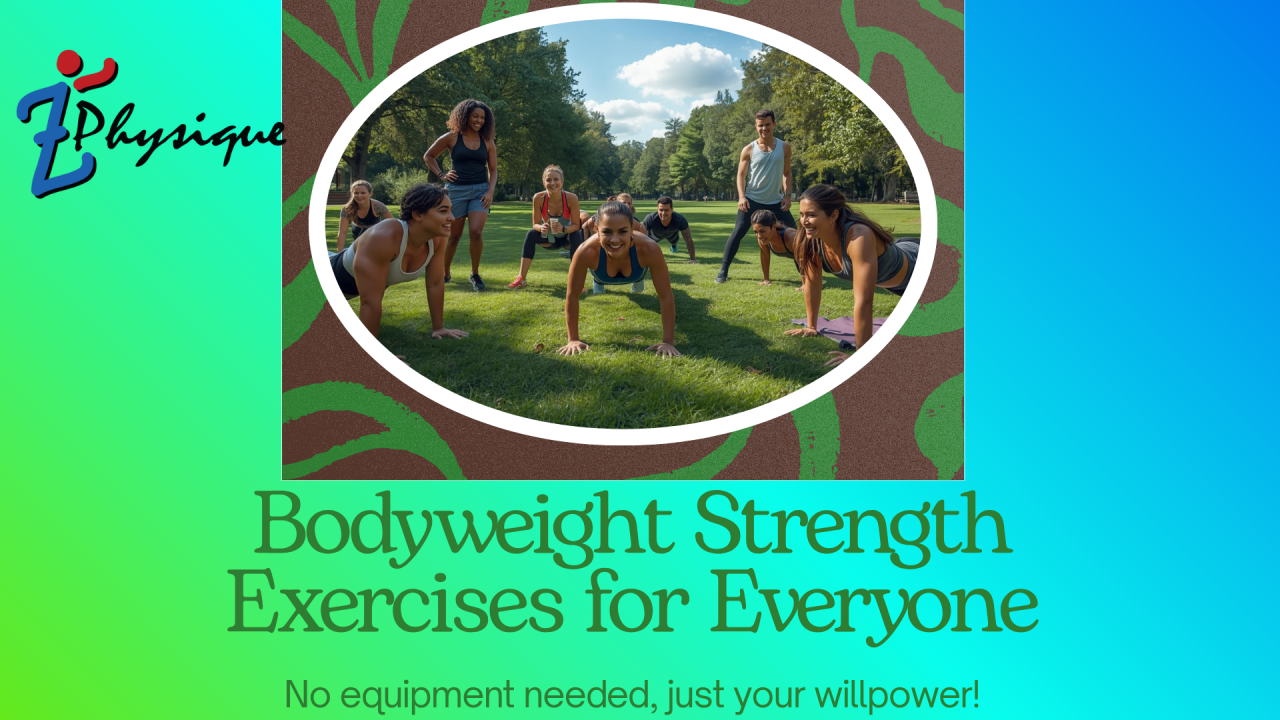
💪 Discover the Power of Bodyweight Strength Exercises
You don’t need a gym membership to build strength. In fact, with the right strategy, bodyweight strength exercises can help you sculpt lean muscle, boost endurance, and improve mobility—anytime and anywhere.
According to Harvard Health, body-weight training can improve muscular endurance and aerobic capacity even in short sessions. Because these movements use your own body as resistance, they are accessible, efficient, and surprisingly challenging.
In the sections below, you’ll discover why bodyweight training works so well, how to use progressions safely, and ways to build consistency that lasts. Let’s dive in and grow stronger—one rep at a time.
🌟 Why Bodyweight Strength Exercises Work
Versatile, Accessible, and Effective
Since they require no equipment, bodyweight strength exercises can be performed almost anywhere—your living room, park, or hotel room. Moreover, they adapt easily to your ability. Harvard Health notes that adjusting leverage, tempo, or repetition count instantly changes intensity, allowing gradual, safe improvement.
Functional Strength That Supports Daily Life
Unlike isolation moves, bodyweight workouts train your body for everyday activities. For example, squats help you lift groceries, and planks reinforce posture. Consequently, you gain real-world strength that enhances your quality of life.
Benefits Beyond Muscle
These routines do far more than tone your physique. Regular resistance work—including bodyweight strength exercises—improves blood-sugar control, bone density, and cardiovascular health. In addition, consistent training supports better balance and coordination, which become increasingly valuable as you age.
🧠 Core Principles for Effective Bodyweight Strength Exercises
Apply Progressive Overload
To keep gaining strength, your body needs new challenges. Fortunately, you can apply progressive overload to bodyweight strength exercises by making small adjustments:
💪 Add extra reps or sets as movements feel easier.
🔥 Slow down your tempo to increase time under tension.
⚡ Shorten rest periods for greater intensity.
✨ Choose tougher variations once you’ve mastered the basics.
Because these micro-progressions accumulate, your muscles stay engaged and continue adapting over time.
Prioritize Recovery and Form
Training hard is important; however, recovery is where your muscles rebuild. Aim for two or three sessions weekly, alternating focus areas and scheduling rest days between. In addition, concentrate on proper form—controlled motion prevents injury and maximizes results.
Therefore, remember: consistency plus recovery equals progress.
🧩 How to Build a Stronger Foundation With Bodyweight Strength Exercises
Before diving into specific moves, it’s helpful to understand how your muscles actually adapt to bodyweight strength exercises. By knowing what’s happening beneath the surface, you can train more effectively and avoid common plateaus.
How Muscle Growth Happens
Every time you perform a strength exercise—whether a push-up or a squat—you create tiny microtears in your muscle fibers. Don’t worry; this is a good thing! During rest and recovery, your body repairs those fibers, making them stronger and more resilient.
Because bodyweight training relies on your own resistance, these adaptations are gradual but highly sustainable. In fact, this slower, steady growth helps prevent overtraining and injuries often caused by heavy lifting.
The Role of Muscle Tension and Control
When performing bodyweight strength exercises, tension and control matter far more than speed. For instance, holding a plank for 45 seconds can be as challenging as doing 10 push-ups if your muscles stay engaged the entire time.
Try to focus on three key factors:
- Time under tension: Move slowly and deliberately through each rep.
- Mind-muscle connection: Concentrate on the specific muscle group you’re targeting.
- Full range of motion: Don’t cut corners—controlled movement leads to better strength gains.
Combining Strength and Mobility
One often overlooked advantage of bodyweight training is improved mobility. Movements like deep squats, lunges, and planks build stability while also enhancing joint flexibility. As a result, you move more freely, perform daily tasks more easily, and reduce your risk of pain or stiffness.
Adapting Over Time
Because your body quickly adapts to repetition, variety is key. Rotate between upper-body, lower-body, and core sessions to challenge your muscles in new ways. In addition, experiment with tempo training (slower reps), isometric holds, or short circuits that blend cardio and strength.
By understanding these mechanisms, you’ll get more out of every workout. Instead of simply going through the motions, you’ll train smarter—developing both strength and confidence with every rep.
💥Bodyweight Strength Exercises and Progressions for Every Level
Below are essential bodyweight strength exercises organized by difficulty. Because progress happens gradually, move forward only when you can complete each stage with good form.
1. Push-Up Progressions for Upper-Body Power
| Level | Variation | Focus |
|---|---|---|
| Beginner | Incline or wall push-up | Builds shoulder and chest stability |
| Intermediate | Standard push-up | Strengthens full-body coordination |
| Advanced | Decline, archer, or one-arm push-up | Adds balance and load challenge |
👉 Tip: Control the lowering phase and pause briefly at the bottom; this boosts endurance and form simultaneously.
2. Squat Variations to Strengthen the Lower Body
| Level | Variation | Focus |
|---|---|---|
| Beginner | Chair squat | Teaches safe mechanics |
| Intermediate | Bodyweight squat | Tones glutes, quads, and hamstrings |
| Advanced | Jump or pistol squat | Builds explosive strength and stability |
Furthermore, adding a short pause or slow descent helps improve control.
3. Core and Stability Movements
A strong core supports every lift. Therefore, integrate planks and glute bridges into your routine.
- Beginner: Kneeling planks or basic bridges
- Intermediate: Standard planks or single-leg bridges
- Advanced: Side planks, RKC planks, or bridge marches
Because these bodyweight strength exercises challenge multiple muscles simultaneously, they enhance posture and balance as well.
4. Pull and Row Variations for Back Strength
If you have access to a stable bar or suspension trainer, include inverted rows. Start with bent knees to reduce load; then, as you progress, extend your legs or elevate your feet. Eventually, you may advance to archer or one-arm rows.
As a result, you’ll develop stronger lats and better posture—both vital for long-term fitness.
🗓️ Weekly Plan to Build Strength With Bodyweight Exercises
| Day | Focus | Example Workout |
|---|---|---|
| Monday | Upper body + core | Push-ups, rows, planks |
| Wednesday | Lower body | Squats, bridges, lunges |
| Friday | Full body | Circuit of all major moves |
| Weekend | Active recovery | Stretching, yoga, or walking |
Start modestly with 2–3 sets of 10–15 reps (or 20–40-second holds). Then, once you adapt, increase the challenge by adjusting volume or variation. Because progress is cumulative, small improvements each week add up quickly.
🔎 Want to Learn More About Bodyweight Strength Exercises?
For an evidence-based look at why bodyweight strength exercises are so effective, explore Harvard Health’s trusted article:
👉 The Advantages of Body-Weight Exercise
It explains how strategic adjustments can keep your workouts engaging while supporting long-term strength, endurance, and vitality.
🚀 Start Your Bodyweight Strength Journey Today
Strength doesn’t come from perfection—it comes from progress.
As part of Rocktober Fitness Fest, join the 14-Day Bodyweight Strength Blast, created to help you feel stronger, more capable, and more consistent.
Here’s how to begin:
🔥 Commit to three quick sessions per week. Use the progressions above or explore expertly designed, video-driven programs on the Z Physique website.
🔥 Use the Z FIT Studio app for registered-dietitian-created meal plans, hydration tracking, and habit reminders.
🔥 Connect with our online fitness community to celebrate wins and stay accountable.
Because each small step builds momentum, you’ll quickly notice changes in strength, energy, and confidence. Therefore, don’t wait for the perfect moment—create it.
👉 Visit z-physique.com and make this Rocktober your strongest season yet.
