Heart-Healthy Eating Habits Start With Simple Daily Choices
Heart-healthy eating habits are not about strict diets or perfection. Instead, they focus on simple, repeatable food decisions that support energy, recovery, and long-term wellness.
For busy adults, nutrition must be realistic. Therefore, focusing on balanced meals, lean protein, plant foods, and healthy fats creates sustainable progress. In addition, building these habits gradually makes them easier to maintain long term.
Inside this month’s nutrition education, the focus is on practical strategies like balanced plates, reducing ultra-processed foods, and making smarter fat choices. These approaches align with current nutrition science and updated dietary guidance.
Most importantly, these habits are designed for real life — not temporary motivation.
Balanced Plate Nutrition Supports Heart-Healthy Eating Habits
One of the easiest ways to build heart-healthy eating habits is using a simple plate structure.
The foundation is straightforward:
- Half your plate vegetables or fruit
- One quarter lean protein
- One quarter whole grains or complex carbs
Because this structure balances nutrients, it supports stable blood sugar, improved digestion, better workout recovery, and long-lasting fullness.
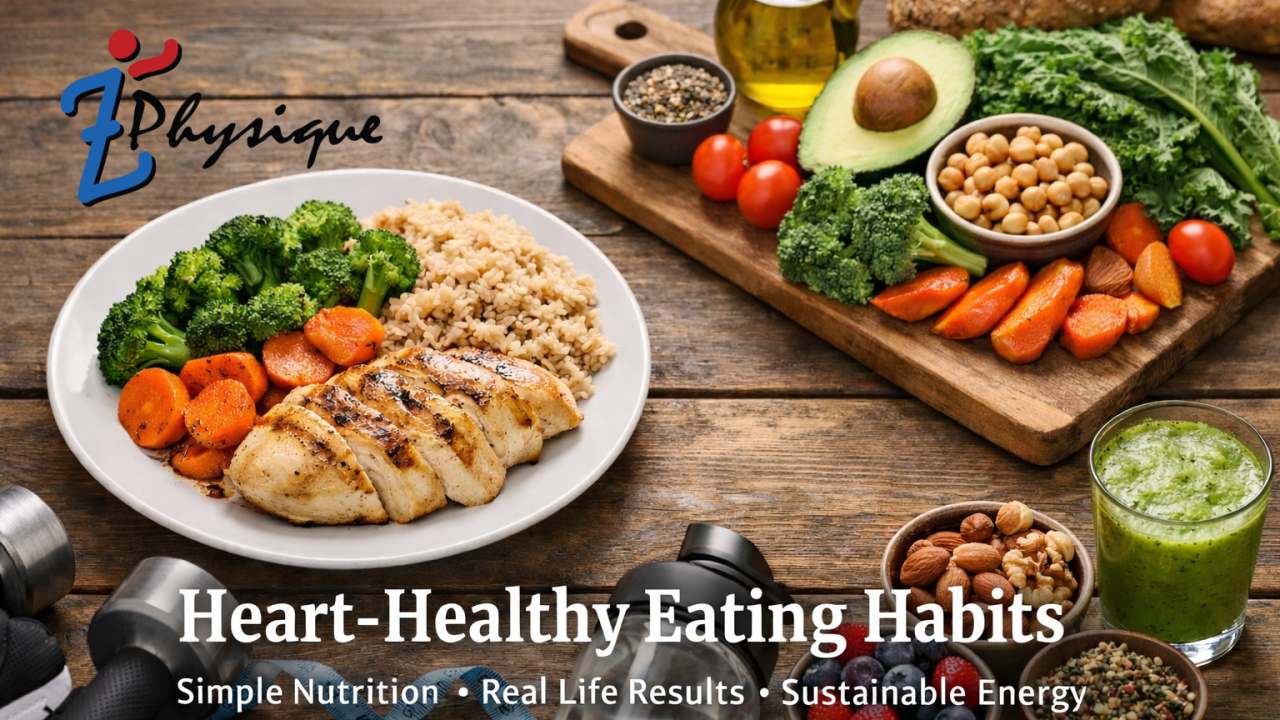
For example, the Healthy Plate Dinner highlighted this month combines lean protein, vegetables, and whole grains to support heart health and performance nutrition simultaneously.
NEW: Fiber Intake and Heart-Healthy Eating Habits
Fiber plays a major role in cardiovascular health. Specifically, soluble fiber helps reduce LDL cholesterol, while insoluble fiber supports digestion and gut health.
Additionally, higher fiber intake is linked to improved blood sugar control and better weight management outcomes. Therefore, increasing fiber is one of the highest-impact nutrition upgrades most adults can make.
Strong fiber sources include:
- Oats and barley
- Beans and lentils
- Berries and apples
- Broccoli and carrots
- Whole grains
As a result, even small daily increases in fiber can improve long-term heart health markers.
Eat More Plants to Strengthen Heart Health Naturally
Plant foods are one of the most powerful tools for improving long-term health. Vegetables, fruits, legumes, and whole grains provide fiber, antioxidants, and anti-inflammatory nutrients.
Research consistently shows plant-forward eating patterns are associated with lower chronic disease risk and improved heart markers.
However, you don’t need to eliminate animal foods. Instead, focus on gradually increasing plant intake. For example:
🥦 Add roasted vegetables to dinners
🍓 Blend fruit into smoothies
🥬 Add greens to eggs or wraps
🫘 Use beans or lentils weekly
Over time, these small additions create meaningful long-term change.
Reduce Ultra-Processed Foods to Improve Heart-Healthy Nutrition
Ultra-processed foods often contain added sugars, sodium, and lower-quality fats. Over time, higher intake is linked with poorer metabolic and cardiovascular outcomes.
Rather than relying on fast food, try preparing simple meals at home when possible.
Meanwhile, swapping sugary drinks for flavored water or mocktails helps reduce added sugar intake.
Finally, replacing packaged snacks with whole-food options supports energy, fullness, and nutrient intake.
Because progress matters more than perfection, consistency always wins.
Hydration and Heart Function — The Overlooked Factor
Hydration directly affects circulation, blood pressure regulation, and exercise performance. However, many adults remain mildly dehydrated throughout the day.
Even mild dehydration can increase heart rate and reduce exercise tolerance. Therefore, consistent fluid intake supports both heart health and workout performance.
Simple hydration strategies include:
- Drinking water first thing in the morning
- Keeping a water bottle nearby during work hours
- Adding electrolytes during longer workouts
- Choosing low-sugar beverages instead of soda
As a result, hydration becomes a simple but powerful tool for improving overall cardiovascular function.
Lean Protein Choices Support Heart Health and Muscle Recovery
Protein plays a major role in metabolism, strength, and recovery. However, choosing lean and varied sources supports heart-healthy eating habits more effectively.
Strong options include:
- Eggs
- Fish and seafood
- Chicken and turkey
- Lean pork
- Low-fat dairy
- Beans, lentils, and tofu
Most adults already meet protein needs. Therefore, focusing on quality and balance matters more than simply eating more protein.
Heart-Healthy Fat Swaps That Support Cardiovascular Wellness
Not all fats affect the body the same way. Replacing saturated fats with unsaturated fats supports heart function and reduces inflammation risk.
Smart swaps include:
🫒 Olive oil instead of butter
🥑 Avocado oil instead of lard
🥛 Low-fat milk instead of whole milk
🥣 Greek yogurt instead of sour cream
🦃 Turkey sausage instead of pork sausage
These swaps help reduce saturated fat intake while maintaining flavor and satisfaction.
Seasonal Vegetables That Strengthen Heart-Healthy Eating Habits
Seasonal produce often delivers stronger flavor, better value, and higher nutrient quality.
February vegetables include broccoli, Brussels sprouts, carrots, cauliflower, cabbage, kale, winter squash, and spinach. Additionally, roasting winter vegetables enhances natural sweetness and improves texture.
Roasting vegetables consistently makes them easier to enjoy long term.
Alcohol Intake and Long-Term Heart and Cancer Risk
Emerging research continues to show even moderate alcohol intake may increase certain cancer risks. In fact, newer research suggests even low daily alcohol intake may increase oral cancer risk, especially when combined with tobacco use.
Instead of eliminating social habits completely, consider limiting weekly intake, choosing mocktails occasionally, and prioritizing hydration and sleep.
Long-term health is built through awareness and consistency.
How Z Physique Supports Heart-Healthy Eating Habits Long Term
At Z Physique, nutrition is built around education and structure — not extremes.
🌿 Simple nutrition frameworks
📱 RD-created meal guidance inside the Z FIT Studio app
🎥 Structured workout programs with guided coaching on the website
🤝 Supportive community accountability
You can explore structured workout programs inside the
👉 Z Physique workout program library
Additionally, you can build accountability and support inside the
👉 Z Physique VIP community group
Science-Backed Nutrition for Heart Health
According to the
👉 Harvard Healthy Eating Plate nutrition model,
prioritizing vegetables, whole grains, healthy fats, and lean proteins supports long-term cardiovascular and metabolic health.
Furthermore, this balanced approach aligns perfectly with sustainable fat loss and performance nutrition.
Why Download the February Nutrition Newsletter
The full newsletter includes recipes, seasonal food strategies, heart-health nutrition education, science-backed nutrition insights, and simple smoothie and meal ideas.
It is designed to help you take action immediately — not just learn theory.
Download + Save for Easy Reference
If you want a simple, practical nutrition guide you can use all month, download the February Nutrition Newsletter and save it for easy reference.
Then scroll below to view or download the full newsletter.
Progress Over Perfection Always Wins
You don’t need a perfect diet. Instead, you need a system that helps you stay consistent.
Heart-healthy eating habits are built through small daily wins — and over time, those wins compound into real, lasting results.
