But November can also bring a familiar concern: How do we enjoy the holidays while continuing to take care of our health?
As we explore in our November 2026 Nutrition Newsletter, part of the answer comes from recognizing that healthy eating isn’t about making every meal perfect. It’s about the choices we make consistently, the habits we develop over time, and understanding how those choices contribute to our overall well-being.
This month’s edition offers practical ideas for a healthier holiday table, two seasonal recipes, and interesting research exploring the relationship between nutrition, brain health, and the limitations of using body weight alone to evaluate health.
And while these subjects might seem unrelated at first, they share something important: Good health is rarely explained by one meal, one measurement, or one decision.
Enjoying the Holidays Without Losing Sight of Your Health
One of the things I’ve always encouraged people to remember is that healthy living needs to fit into real life. That includes holidays, celebrations, family traditions, and the occasional meal that looks different from what we normally eat.
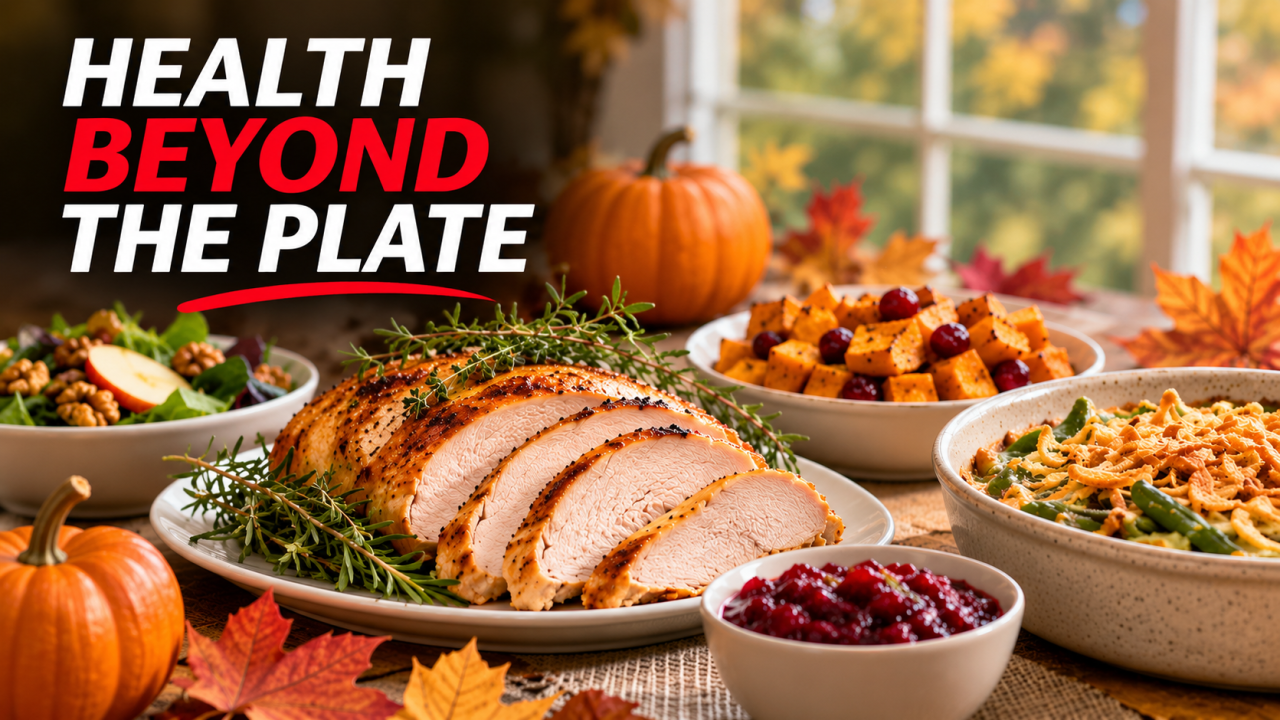
Thanksgiving dinner doesn’t need to become an exercise in restriction. You can enjoy the foods you love while making room for vegetables, seasonal produce, and dishes prepared with ingredients that support your nutritional needs.
Sometimes the simplest adjustments make the most sense. Roasting vegetables with olive oil and herbs can bring out wonderful flavors without requiring complicated preparation. Using broth, garlic, or seasonings in traditional side dishes can create satisfying alternatives without sacrificing the familiar foods people enjoy.
Planning also makes a difference, particularly when you’re preparing meals for a larger gathering. Choosing seasonal ingredients, organizing your shopping ahead of time, and thinking about how leftovers can become future meals may help reduce both food waste and unnecessary expenses.
Our November newsletter explores these ideas in its A Healthier Holiday Table feature, including seasonal produce suggestions, budget-friendly Thanksgiving planning, and important food safety reminders.
The goal isn’t to create a holiday meal that meets someone else’s definition of healthy. It’s to find a balance that allows you to enjoy the occasion while continuing to care for yourself.
Two Recipes Worth Bringing to Your Table
Food should be enjoyable, and nutritious meals certainly don’t need to be complicated.
This month’s newsletter includes two recipes that offer different ways to bring familiar ingredients into your kitchen.
Turkey and White Bean Chili combines lean ground turkey, white beans, vegetables, tomatoes, and seasonings into a satisfying meal. With 39 grams of protein and 5 grams of fiber per serving, it’s a practical option for a busy evening or a comforting meal during the cooler months.
It’s also a useful reminder that meals built around protein, beans, and vegetables can provide substantial nutrition without requiring an elaborate cooking process.
Our second recipe, Best Green Bean Casserole, offers a lighter variation of a familiar holiday favorite. Fresh green beans, mushrooms, shallots, and a creamy sauce come together with a crisp topping. At approximately 111 calories per serving, it provides another option for the Thanksgiving table.
Neither recipe needs to replace a treasured family tradition. Think of them as additional possibilities, whether you’re preparing a holiday gathering or simply looking for something different to enjoy during the week.
You’ll find the complete ingredients, preparation instructions, and nutritional information for both recipes in the newsletter.
What Your Everyday Food Choices May Mean for Brain Health
One of the more interesting topics in November’s edition looks beyond the immediate benefits of eating well and considers what our dietary habits may mean for cognitive health as we age.
The newsletter discusses a 2026 study published in JAMA Network Open involving 1,865 older adults. Researchers examined how adherence to different healthy dietary patterns related to dementia risk, including among participants with biological markers associated with Alzheimer’s disease and other neurological changes.
The findings suggested that healthier eating patterns were associated with a lower risk of dementia, with certain dietary patterns showing potentially important associations among people already at elevated neurological risk.
It’s important to understand what that means. The research identifies associations, not proof that a particular diet can prevent Alzheimer’s disease or dementia. Cognitive health is influenced by many factors, and nutrition represents only one part of that picture.
Still, the findings offer another reason to pay attention to the overall quality of what we eat.
Meals that regularly include vegetables, fruit, whole grains, beans, nuts, and sources of unsaturated fats can support a nutritious eating pattern. Foods such as salmon, sardines, leafy greens, berries, and olive oil are examples highlighted in this month’s newsletter.
What I appreciate about this perspective is that it doesn’t require an entirely new approach to eating. Many of these foods are already familiar, affordable in different forms, and adaptable to individual preferences.
The bigger opportunity is finding ways to include them more consistently, rather than trying to overhaul everything at once.
Why the Number on the Scale Doesn’t Tell the Whole Story
Another important feature in this month’s newsletter examines research published in Nature Medicine involving a risk-prediction model called OBSCORE.
For years, body mass index (BMI) has been used as one tool for evaluating weight-related health risks. While BMI can provide useful information at a population level and help inform clinical assessments, it has limitations. It doesn’t directly measure body composition or explain why two people with similar measurements may have very different health profiles.
The OBSCORE research explored a more comprehensive approach by examining multiple health-related factors to predict the likelihood of developing obesity-associated conditions.
Researchers developed a model incorporating information such as age, waist-to-height ratio, blood pressure, cholesterol, blood glucose markers, and other clinical measures. Their findings suggest that looking at these factors together may help identify individuals who face greater health risks, even when their BMI measurements are similar.
OBSCORE still requires further validation before routine clinical use, but the underlying message is worth considering.
Your weight can be one useful piece of information, but it cannot describe your entire health.
I’ve always believed that understanding the individual matters. Two people can have similar goals or measurements while having very different circumstances, abilities, health histories, and needs.
That is one reason I encourage people to think beyond the scale when evaluating their progress. Changes in strength, endurance, mobility, daily energy, and the ability to participate in activities they enjoy can all provide meaningful information about how their efforts are affecting their lives.
Those observations don’t replace medical assessments, but they help us appreciate that progress and well-being involve more than a single number.
Bringing It All Together This November
When you look at the subjects covered in this month’s newsletter, there’s a common lesson worth carrying into the holiday season.
The meals we enjoy with family matter. So do the ordinary meals we prepare on a Tuesday evening. Our long-term eating patterns matter, and so does recognizing that health involves much more than body weight.
You don’t need to approach November with a long list of restrictions or a promise to start over once the holidays are finished.
Instead, consider what might make healthy living a little easier during this season. Maybe it’s preparing an extra serving of vegetables with dinner, trying a new recipe, keeping nutritious ingredients available for busy days, or making time to enjoy a holiday meal without feeling that every choice needs to be evaluated.
As you move through November, I hope you’ll give yourself room to enjoy the season while continuing to make choices that support your health. There will always be opportunities to learn something new, adjust a habit, or approach an old routine differently. None of that requires perfection.
What matters is developing a way of taking care of yourself that feels practical enough to continue, meaningful enough to value, and flexible enough to accommodate the life you’re actually living.
Inside the November 2026 Nutrition Newsletter
This month’s free Z Physique Nutrition Newsletter includes our Turkey and White Bean Chili and Best Green Bean Casserole recipes, a healthier holiday planning guide, a Thanksgiving nutrition quiz, and research features examining diet quality and dementia risk as well as the OBSCORE approach to understanding weight-related health risks.
You’ll also find practical handouts covering brain-supportive eating habits and important health measurements beyond the scale. You can explore all of these resources, along with this month’s recipes and holiday nutrition tips, in our November 2026 Nutrition Newsletter.
Read the November 2026 Nutrition Newsletter
Your Next Step
If you’re interested in developing healthier habits that fit your everyday life, our free Healthy Lifestyle Starter Guide offers a practical place to begin. It’s designed to help you think about nutrition, movement, and the daily choices that support long-term well-being without feeling that everything needs to change at once.
About Z Physique
Z Physique is an online fitness and nutrition education platform founded by Evan Zingman, NSCA Certified Personal Trainer. Our mission is to make reliable, practical health and fitness education accessible to people who want to build healthier, stronger lives at their own pace.
Through free educational resources, along with premium workout programs, memberships, and self-paced courses, Z Physique encourages an approach to healthy living built around understanding, consistency, and individual progress.
