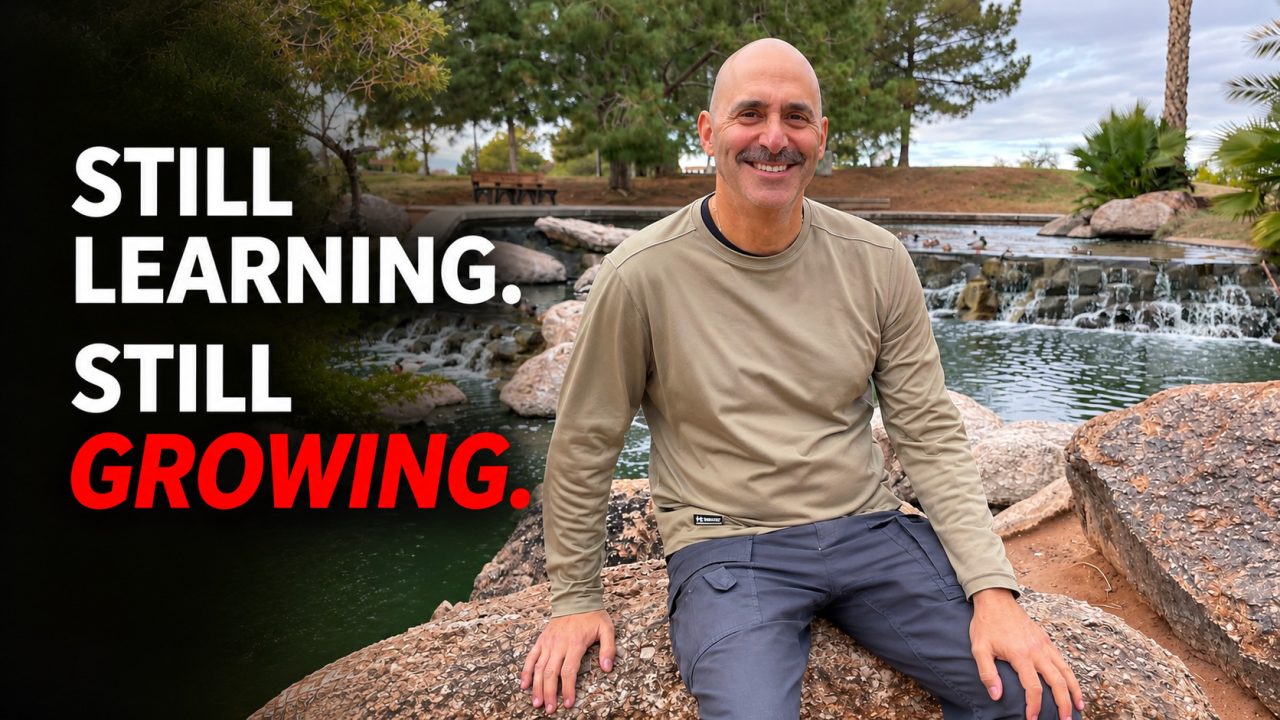
When I think about how much Z Physique has changed since I started the business in 2009, I find myself thinking less about the business itself and more about the people I’ve had the opportunity to work with along the way.
I’ve met people who were excited to begin exercising but weren’t sure where to start. Others had tried different diets or workout programs over the years and were frustrated that nothing seemed to stick. Some came to me with specific goals, while others simply wanted to feel better, have more energy, or become more comfortable taking care of themselves.
Every person brought a different story, different circumstances, and a different understanding of what healthy living meant to them. And although I certainly learned more about exercise, nutrition, and coaching as the years went by, some of the most valuable lessons came from listening to those people and discovering what they actually needed from me.
One thing became increasingly clear: providing someone with information isn’t necessarily the same as helping them understand it.
Learning What People Really Need
Early in my career, like many fitness professionals, I placed considerable emphasis on making sure people had the information and guidance they needed to reach their goals. Exercise selection, proper technique, nutrition fundamentals, and program structure were all important, and they still are. But experience gradually taught me that even the most carefully developed program has limited value if the person following it doesn’t understand why they’re doing something or how it fits into their life.
I remember working with people who would listen carefully as I explained an exercise or discussed a nutrition principle, only to ask a question that made me realize I hadn’t explained it as clearly as I thought. What seemed straightforward to me wasn’t necessarily straightforward to someone hearing it for the first time.
Those moments were valuable reminders that familiarity can sometimes make us forget what it’s like to be a beginner.
Over time, I became more attentive to the way people responded to information. I learned to recognize when someone needed a different explanation, a practical example, or simply more time to become comfortable with a concept. Sometimes the most helpful thing I could do was set aside the technical terminology and explain something in the same way I might explain it to a friend.
I also learned that people don’t always need more information. Sometimes they need help making sense of what they’ve already heard.
Think about how much advice we’re exposed to regarding exercise and nutrition. One article recommends a particular training method, another promotes a different approach, and social media seems to introduce a new rule about healthy living every week. Even when some of that information is useful, sorting through it can become exhausting.
I’ve come to believe that part of my responsibility as a fitness professional is to make that process less confusing, not add to the confusion.
The Difference Between Knowing and Understanding
There’s an important distinction between knowing what someone recommends and understanding why that recommendation might be useful.
Someone might know that strength training is beneficial, for example, without understanding how it supports everyday activities, why recovery matters, or how to choose an appropriate starting point. Another person might have heard countless recommendations about eating more nutritious foods but still feel uncertain about how to put together meals that fit their preferences, schedule, and needs.
When people understand the reasoning behind a recommendation, they’re better equipped to make decisions for themselves. They can recognize when an approach needs adjusting, ask more informed questions, and begin developing confidence in their own judgment.
That has become increasingly important to me.
I don’t want someone to follow an exercise program simply because I told them to. I’d much rather help them understand what they’re doing, what they’re working toward, and how to recognize progress beyond a number on the scale or the amount of weight they’re lifting.
Of course, understanding something doesn’t automatically make it easy to practice consistently. Life gets busy, motivation changes, and unexpected responsibilities can interfere with even the best intentions. I’ve seen that throughout my career, too. But a person who understands the fundamentals has something valuable to return to when circumstances change. They aren’t entirely dependent on the latest program or someone else’s instructions to find their way forward.
For me, that’s one of the most meaningful outcomes of education.
Looking at Our Educational Library With Fresh Eyes
This perspective has also influenced the way I think about the educational resources we’ve developed and shared through Z Physique over the years.
Since 2009, the website has grown to include articles, fitness and nutrition resources, instructional materials, and educational programs covering a wide range of subjects. Much of that material was created or added at different stages in the business’s history, when our presentation, priorities, and approach to communicating information weren’t always the same as they are today.
Recently, I’ve been spending time revisiting those older resources.
It’s been an interesting experience because I’m looking at them through the eyes of someone who has accumulated many more years of experience working with people. I find myself asking questions that go beyond whether the information is technically correct.
Would someone unfamiliar with this subject understand what we’re trying to explain? Are we providing enough context to make the information useful? Does the article acknowledge that people have different needs and circumstances? Is the advice practical, appropriately supported, and consistent with what we understand today?
And perhaps most importantly, does the material genuinely help someone become better informed?
Sometimes the answer is yes, and an article needs only a few thoughtful improvements. Other times, a subject deserves a more substantial revision, a completely fresh explanation, or a different approach altogether. There are also occasions when retiring an older resource makes more sense than continuing to maintain it.
That’s the work we’re gradually undertaking across the Z Physique educational library.
It’s an ongoing process rather than a project with a fixed completion date. Some older articles may still reflect an earlier writing style or approach while we work through the library. As we complete substantial revisions to our public educational articles, we’ll include a visible “Last updated” date so readers can see when that material was most recently reviewed and revised.
I believe that’s a responsible way to care for an educational resource that has developed over many years.
Why This Matters to Me
There’s no shortage of fitness and nutrition information available today. In fact, I suspect many people feel they have more information than they know what to do with.
That makes me think carefully about what we’re contributing.
Over the years, I’ve come to appreciate that building an educational library isn’t simply a matter of adding more articles, videos, and resources. There’s also a responsibility to look after what’s already there. Information that was useful when it was first published may benefit from additional context, clearer explanations, or a fresh look at the research. Sometimes the way we communicate a subject deserves just as much attention as the subject itself.
I don’t believe Z Physique needs to publish something new every day to be valuable. I’d rather take the time to improve an existing article so someone can understand a subject more clearly than continually add material that doesn’t offer anything particularly useful.
That approach also gives me an opportunity to revisit familiar subjects with the benefit of additional experience. I may explain something differently today than I would have years ago, not because the fundamental principle has necessarily changed, but because I’ve learned more about how people interpret information and what helps them apply it.
I often think about the people I’ve worked with who simply needed someone to explain something differently before it finally made sense. Those experiences have stayed with me, and they’re part of what motivates me to continue improving the resources we share.
For me, maintaining an educational library is an extension of the same responsibility I feel when working directly with someone: making sure the information we provide is worth their time and attention.
Continuing to Learn, Continuing to Improve
When I started Z Physique in 2009, I wanted to help people improve their health and fitness. That hasn’t changed.
What has changed is the depth of my understanding of how people learn, what they struggle with, and how differently they may respond to the same information. Years of experience have made me more patient with the process, more attentive to individual circumstances, and more convinced that good education should leave people feeling informed rather than overwhelmed.
I also recognize that I still have things to learn. Research continues to develop, recommendations evolve, and every person brings a perspective or experience that can teach us something.
I don’t see that as a weakness in what we do. I see it as a reason to remain thoughtful about the information we share.
So as you explore Z Physique, you may notice older articles being updated, familiar subjects being approached from a different perspective, or resources being replaced with material that better reflects our current educational philosophy.
Behind those changes is a fairly simple intention: to make what we’ve built more useful to the people who visit, read, learn, and place their trust in us.
After all these years, I still enjoy the opportunity to explain something in a way that helps another person understand it. That satisfaction has never really gone away.
And as long as I’m doing this work, I hope I never stop learning how to do it better.
