Z Physique Journal
Volume 2 · Issue 1
For most of my life, I assumed the moments we’d remember would be the big ones. Graduations. Weddings. Retirement. The family vacation everyone spent months looking forward to before finally loading the car and heading down the road.
Those moments naturally capture our attention because we invest so much in them long before they arrive. We save for them, plan around them, talk about them, and imagine what they’ll feel like. They become landmarks on the horizon, giving shape to the future and reminding us that there are still meaningful experiences waiting to be lived.
But the older I get, the more I wonder if those are really the moments that stay with us.
When I look back on different chapters of my own life, I don’t remember destinations as clearly as I remember what happened around them. I remember conversations that wandered long after dinner was over because no one was ready to call it a night. I remember taking the long way home for no particular reason other than enjoying the company. I remember ordinary afternoons that never appeared on a calendar and never seemed important while they were happening, yet somehow became the memories that stayed with me.
I’ve noticed the same pattern whenever people tell stories about the years that mattered most to them. They rarely begin by talking about accomplishments. Instead, they remember moments that seemed almost too ordinary to notice at the time: a Saturday morning that slowly became a family tradition, an evening around the dinner table that stretched into laughter and conversation, or a walk through a familiar neighborhood where nothing remarkable happened except that they were together. It’s interesting how often the memories people treasure most would have sounded completely ordinary if someone had described them beforehand.
That observation has quietly changed the way I think about life.
We spend a remarkable amount of time preparing for milestones, yet we live between them. Most of our lives unfold in places that never become postcards or photo albums. They unfold on Tuesday mornings before work, during walks after dinner, while helping a neighbor with a project, or sitting on the back patio after the dishes are done. Those moments rarely ask for our attention while we’re living them. They simply pass by, one after another, until enough years have gone by for us to realize they weren’t interruptions between important events.
They were the important events.
Looking back, I think that’s what surprised me most.
For years I thought healthy living was mainly about helping people reach goals they could measure. Strength could be measured. Endurance could be tested. Progress could be photographed. Those things mattered because they showed people their hard work was paying off, and I still think they’re worth celebrating.
What changed wasn’t my appreciation for those milestones. It was my understanding of what they were actually leading toward.
Today, nearly all of my coaching happens online through messages, video check-ins, and conversations with members who are building healthier habits in the middle of busy, everyday lives. Years ago, many of those conversations happened face-to-face. The setting has changed, but something about the conversations has stayed the same.
People usually begin by talking about fitness. They want to become stronger, lose weight, improve their balance, or simply feel more consistent. Those goals matter because they’re tangible, and when someone begins taking better care of themselves, they’re often the easiest changes to notice.
Months later, however, the conversation almost always sounds different. Very few people begin by telling me how many workouts they’ve completed.
Instead, they tell me a story.
Not long ago, a member sent me a message after returning from a trip.
She wasn’t writing about exercise. She wasn’t celebrating a number on the scale or a personal best. Instead, she wrote something so simple that I found myself thinking about it for days afterward.
“I never even thought about whether I could keep up.”
That’s all she wrote.
At first glance, it doesn’t sound like a remarkable statement. But the longer I sat with it, the more I realized it captured something I’d been seeing for years but had never quite been able to put into words.
For the entire trip, she had been free to enjoy the experience without constantly wondering whether her body would allow her to participate. She wasn’t measuring distance. She wasn’t calculating how much energy she needed to save for later. She wasn’t quietly deciding which activities to skip.
She was simply living the trip while it was happening.
That message stayed with me because it revealed something far more meaningful than improved fitness.
It made me realize something I’ve been seeing for years. Maybe one of the biggest signs that healthy living is working is that you stop thinking about healthy living. Not because it doesn’t matter anymore, but because it’s quietly doing its job while you’re busy living your life.
Research consistently shows that regular physical activity supports physical health, independence, quality of life, and the ability to stay engaged in everyday activities as we age. Learn more from the CDC about the benefits of physical activity.
I suspect that’s one of the least talked about gifts of healthy living.
When we live with constant pain, limited mobility, or lingering fatigue, it’s only natural that our attention turns inward. We think about how far we have to walk before we leave the house. We notice every flight of stairs. We wonder whether there will be somewhere to sit when we arrive. We quietly weigh whether we have enough energy to enjoy today without paying for it tomorrow. None of those thoughts make us ungrateful or negative. They’re simply what happens when your body keeps asking for your attention.
Over the years, I’ve watched those quiet calculations begin to disappear.
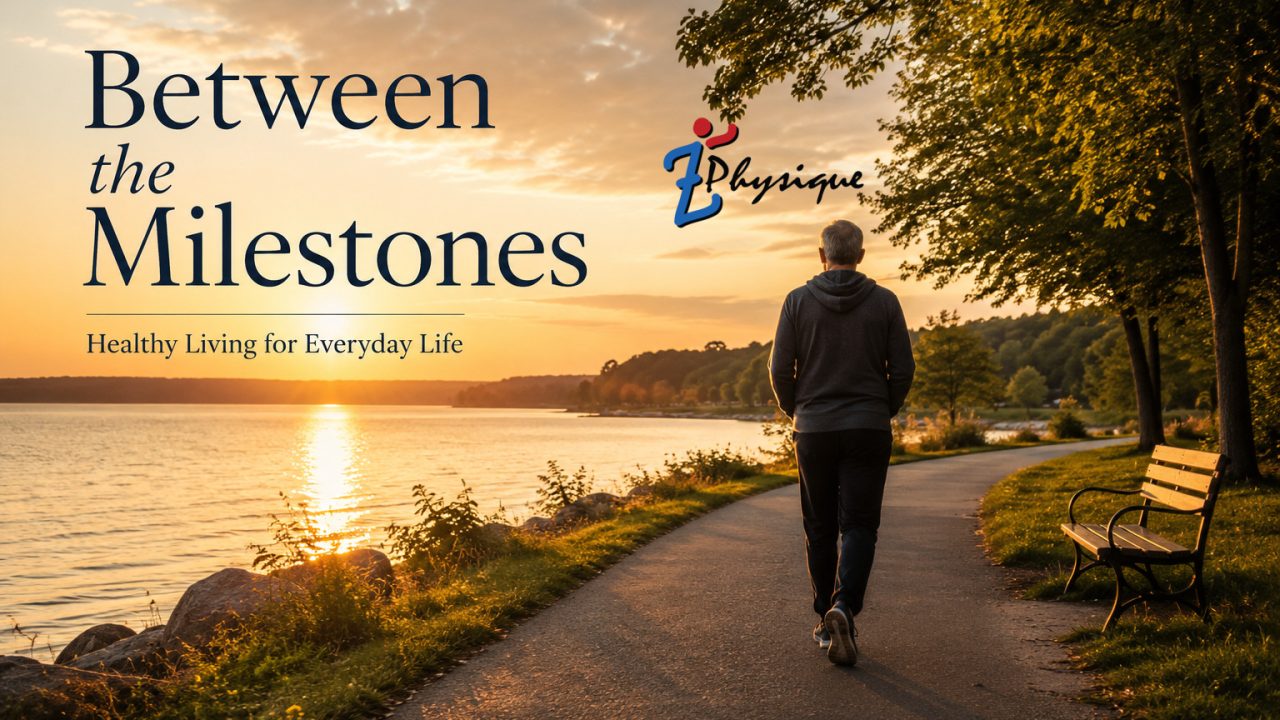
Not overnight, and rarely in ways dramatic enough for people to notice while they’re happening. The change is usually much more subtle than that. A person who once searched for the closest parking space begins parking a little farther away without thinking about it. Someone who always looked for the nearest chair finds themselves standing comfortably through an entire conversation. A walk that once required planning gradually becomes something they simply decide to do because the evening is beautiful.
Those moments may not seem significant on their own, but together they tell a much bigger story. Little by little, the body begins asking for less attention. Without realizing it, people begin paying more attention to everything else.
They listen more carefully to the conversation they’re having instead of wondering how much farther they have to walk. They notice the neighborhood around them instead of calculating how much energy they have left. They spend time with grandchildren, friends, or family without quietly wondering whether they’ll be able to keep up.
Looking back, I don’t think I’ve been witnessing people become more interested in fitness.
I’ve been watching life slowly take its place again.
That probably sounds strange coming from someone who has spent so much of his life encouraging people to exercise, but the longer I’ve coached, the more convinced I’ve become that this is exactly what healthy living is supposed to do.
It shouldn’t ask us to think about ourselves more.
It should allow us to think about ourselves less.
Not because our health has become unimportant, but because it has become reliable enough that our attention can return to the people we love, the places we enjoy, and the ordinary experiences that quietly become the memories we carry for the rest of our lives.
Every now and then, I’ll catch myself wondering what memories are being made today without any of us realizing it.
Most of them probably won’t seem important while they’re happening.
They’ll look like an ordinary Tuesday.
A walk after dinner because the evening feels too nice to stay inside. A grandchild asking one more question before bedtime. Friends lingering around the table because the conversation is simply too enjoyable to end. Helping someone move into a new home. Working in the yard on a Saturday morning. Picking up groceries on the way home.
None of those moments announce themselves as memories. They simply become part of life. Years later, we look back and realize those ordinary days quietly became the chapters we treasured most.
I think healthy habits work much the same way.
A walk around the neighborhood rarely feels life changing while we’re taking it. Neither does preparing a balanced meal, completing a strength workout, or spending a few minutes improving mobility before the day begins. Most healthy choices feel ordinary.
Looking back, I think that’s exactly as it should be.
The purpose of today’s workout was never to become today’s memory.
Its purpose was to quietly support the memories that were still being made.
If someone asked me today what healthy living means, I don’t think I’d begin by talking about exercise. I’d begin by talking about ordinary life.
I’d talk about having the freedom to accept an invitation without wondering whether your body will cooperate. I’d talk about planning a family trip with excitement instead of hesitation. I’d talk about finishing the day thinking about the people you spent it with instead of the discomfort you carried through it.
For a long time, I believed healthy living was about building a stronger body.
Today, I think it’s always been about something more.
It’s about caring for ourselves well enough that life can become the center again.
And perhaps that’s what we’ve been protecting all along.
Continue the Conversation
What ordinary moments have become some of your favorite memories?
As you reflect on the people, places, and experiences that matter most, ask yourself:
How has taking better care of yourself allowed you to be more present in those moments?
Your Next Step
This week, choose one small habit that makes everyday life a little easier. Take a walk after dinner, prepare a balanced meal, complete a workout, or spend a few minutes improving mobility. The goal isn’t another milestone—it’s building a life you enjoy living between them.
Healthy Lifestyle Starter Guide
Ready to build healthy habits that last? Download the Healthy Lifestyle Starter Guide to help you build practical, sustainable habits that fit everyday life.
Continue exploring this month’s theme with these related Z Physique resources:
Related Resources
- Online Fitness Memberships
- Previous Journal: Real-Life Strength
- Real-Life Strength Action Guide
- Workout of the Week
- August Nutrition Spotlight
From the Editor
One of the unexpected gifts of writing this Journal has been realizing how often the most meaningful coaching conversations have very little to do with exercise itself. They usually begin with fitness, but they almost always end with life. I hope this reflection encourages you to notice the quiet moments that often matter most—and reminds you that taking care of yourself is ultimately about having more freedom to enjoy them.
— Evan
