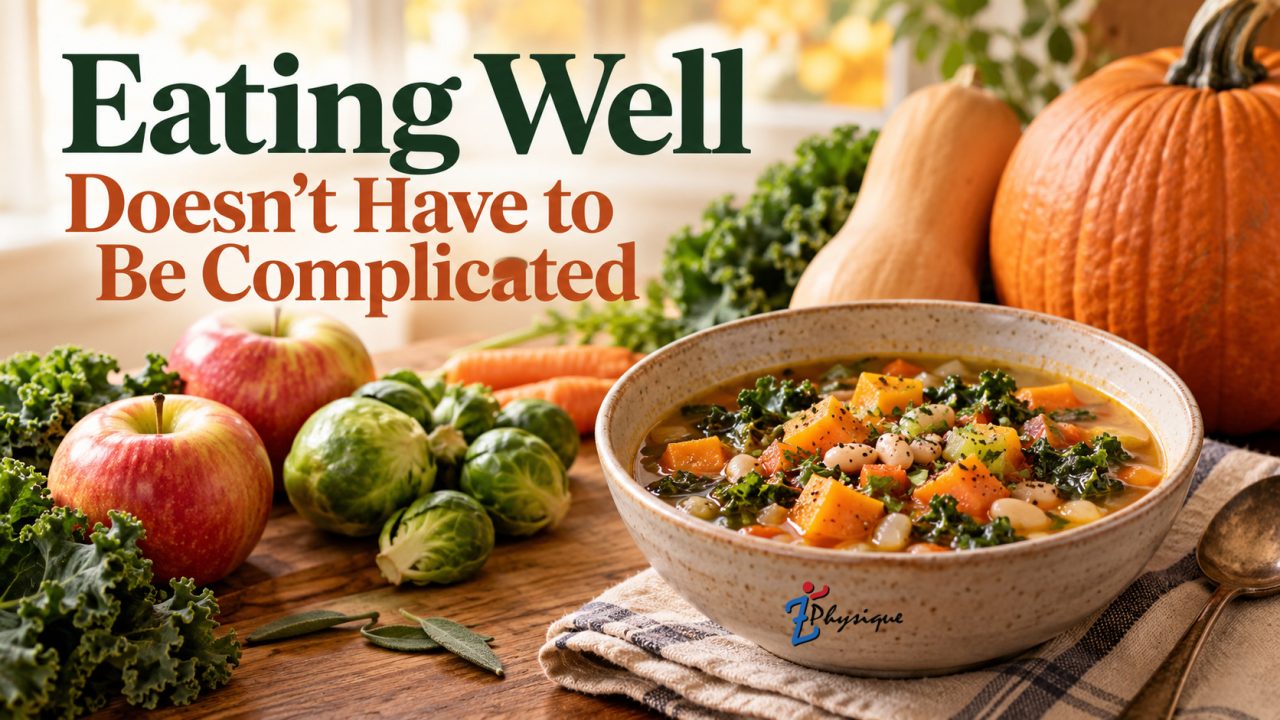
There’s something about October that naturally changes the way we eat.
The mornings get a little cooler. Soup starts sounding good again. Apples, squash, sweet potatoes, and other fall foods begin showing up more often. Meals that felt too warm or heavy a few months ago suddenly seem comforting.
And maybe there’s a useful reminder in that.
Eating well doesn’t always have to begin with a new diet, a complicated meal plan, or a long list of foods you’re supposed to avoid. Sometimes it begins with making ordinary food a little easier to prepare, enjoy, and come back to.
That’s a theme running throughout this month’s Z Physique Nutrition Newsletter.
Let the Season Make It Easier
One of my favorite ideas in this month’s newsletter is simple: cook once, serve twice.
Roast a larger batch of vegetables and use some as a side tonight and the rest in soup tomorrow. Cook beans or lentils and find another use for the leftovers. Make enough of a meal that tomorrow’s lunch is already taken care of.
October gives us plenty to work with—apples and pears, winter squash, sweet potatoes, Brussels sprouts, cabbage, kale, carrots, onions, mushrooms, and other foods that work especially well in simple fall meals.
None of this is revolutionary.
That’s precisely why I like it.
When healthy eating depends on having enough time and energy to make the “perfect” meal every day, it becomes difficult to sustain. When tonight’s dinner makes tomorrow a little easier, healthy eating starts fitting into real life.
Look at What Shows Up Every Day
The newsletter also takes a closer look at added sugar and fructose, including where they can appear in foods and drinks we consume regularly. It discusses current research into how fructose is metabolized and offers practical ideas such as choosing whole fruit instead of juice, drinking water or unsweetened beverages more often, and checking labels for added sugars.
The goal doesn’t need to be eliminating every gram of sugar from your life.
A more useful place to start may simply be awareness.
What do you drink most days? What’s in the yogurt you routinely buy? What snacks tend to make it into the cart? What condiments or packaged foods have become automatic purchases?
Those ordinary choices matter because they’re ordinary. They happen repeatedly without requiring much thought.
And that means they also give us plenty of opportunities to make small adjustments without rebuilding our entire diet.
Processing Is Worth Paying Attention To
Another article in this month’s newsletter explores research involving more than 2,100 adults and ultra-processed foods. Higher intake was associated with poorer attention and slower mental processing, including among people whose overall diets were otherwise considered nutritious.
That doesn’t mean every food that comes in a package is suddenly off limits.
It does give us another reason to pay attention to the balance of what we eat.
Fruit, vegetables, beans, whole grains, eggs, fish, yogurt, nuts and other minimally processed foods don’t have to make up a picture-perfect diet. They can simply become the foods we make room for more often.
The newsletter suggests approaching that gradually—planning meals, keeping convenient whole-food options available, cooking at home when possible, and replacing one ultra-processed choice at a time.
I think that last part is especially important.
One choice at a time.
A Better Question to Ask
Nutrition advice often leaves us asking:
What am I supposed to stop eating?
Maybe a more useful question is:
What could I make easier to eat more often?
Maybe it’s keeping fruit where you can see it or having frozen vegetables available when you don’t feel like chopping anything. Maybe it’s making enough dinner for tomorrow’s lunch or replacing one sweetened drink with water or unsweetened tea.
Or maybe it’s making a pot of soup on Sunday and knowing that one decision has already taken care of several meals.
These aren’t dramatic changes. They don’t need to be.
The habits that support our health are often built through choices small enough to repeat.
Or maybe it’s making a pot of soup on Sunday and knowing that one decision has already taken care of several meals.
These aren’t dramatic changes.
They don’t need to be.
The habits that support our health are often built through choices small enough to repeat.
Inside the October Nutrition Newsletter
This month’s public Nutrition Newsletter includes a Fall Chicken Sheet Pan Dinner, Fall Apple Salad, seasonal cooking ideas, an added-sugar quiz, information about fructose and metabolic health, liver health, ultra-processed foods and attention, plus practical handouts you can use at home.
If one idea stands out while you’re reading, don’t worry about changing everything else.
Start there.
Because eating better doesn’t have to mean eating perfectly.
Sometimes it simply means making the next good choice a little easier.
