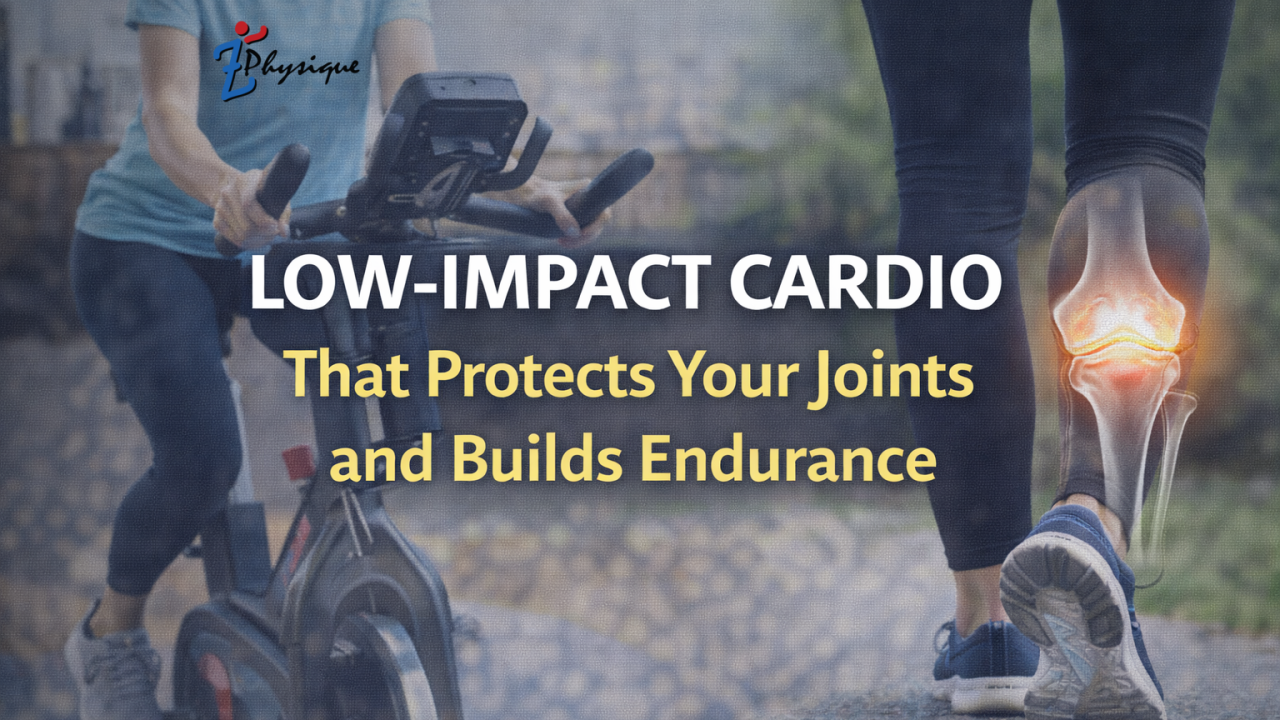
Cardio doesn’t need to leave you sore, exhausted, or dreading your next workout. In fact, for many people rebuilding their routine, low-impact cardio is one of the most effective ways to improve endurance while protecting joints and energy.
If high-impact workouts feel intimidating or uncomfortable, you’re not doing anything wrong. Your body may simply need a smarter approach — one that builds stamina without unnecessary stress.
At Z Physique, we believe cardio should support your life, not beat your body up.
What Low-Impact Cardio Really Means
Low-impact cardio refers to activities that keep at least one foot on the ground (or reduce joint load) while still elevating your heart rate.
Low-impact doesn’t mean low effort. Instead, it means:
- Less stress on joints
- More control over intensity
- Better recovery between workouts
- Higher likelihood of consistency
For many adults, especially those returning to fitness, this approach leads to better long-term results.
Why Low-Impact Cardio Is Ideal During a Reset Phase
When you’re rebuilding habits, your goal isn’t to push your limits every session. It’s to build endurance you can maintain.
Low-impact cardio helps because it:
- Supports heart health without excessive fatigue
- Reduces soreness that can derail consistency
- Allows more frequent movement
- Pairs well with strength training
As a result, cardio becomes something you can repeat week after week — not something you need to recover from for days.
How Low-Impact Cardio Supports Recovery Between Strength Workouts
One often-overlooked benefit of low-impact cardio is how well it supports recovery. When paired with strength training, gentle cardiovascular movement helps increase blood flow to working muscles without adding extra strain.
This matters because improved circulation can:
- Reduce lingering muscle soreness
- Support nutrient delivery to muscles
- Improve overall recovery between workouts
- Help you feel ready for your next strength session
Instead of viewing cardio as something separate from recovery, low-impact cardio can become part of your recovery strategy. Walking, cycling, or light cardio circuits on non-strength days help you stay active while still allowing your body to rebuild and adapt.
Cardio Options You Can Do Anywhere
You don’t need a gym or fancy equipment to benefit from low-impact cardio.
Effective options include:
- Brisk walking (outdoors or treadmill)
- Cycling (indoor or outdoor)
- Elliptical training
- Swimming or water aerobics
- Marching or low-impact circuits at home
These movements elevate your heart rate while staying gentle on your joints.
How to Make Low-Impact Cardio Feel Challenging (Without Impact)
One common misconception is that low-impact workouts can’t be effective. However, intensity doesn’t come from impact — it comes from effort.
Ways to increase intensity safely:
- Increase duration gradually
- Add intervals (faster pace, then recovery)
- Use incline or resistance
- Shorten rest periods
- Focus on controlled, purposeful movement
This allows you to build endurance without increasing joint strain.
How Low-Impact Cardio Improves Endurance Without Draining Your Energy
Many people avoid cardio because they associate it with feeling wiped out for the rest of the day. However, low-impact cardio builds endurance differently than high-intensity or high-impact workouts.
Because low-impact cardio:
- Uses controlled, repeatable movement
- Allows you to regulate effort more easily
- Places less stress on the nervous system
…it helps improve cardiovascular endurance without leaving you overly fatigued. Over time, this leads to better stamina during workouts, daily activities, and long days — without the energy crashes that often follow intense cardio sessions.
This makes low-impact cardio especially useful during a reset phase, when your goal is to feel better overall, not just push harder.
Cardio and Joint Health: What the Research Says
Joint-friendly movement is especially important if you’re managing stiffness, past injuries, or age-related joint changes. Choosing the right type of cardio can make a meaningful difference in how your body feels — both during workouts and in daily life.
According to the Cleveland Clinic, low-impact cardiovascular exercise supports joint health by strengthening the muscles around your joints and improving circulation without placing excessive stress on vulnerable areas. Activities like walking, cycling, swimming, and elliptical training are highlighted as effective ways to maintain mobility and cardiovascular fitness while protecting joints from repetitive impact. You can read their full guidance on low-impact cardio and joint health here.
This research reinforces why low-impact cardio is a smart, sustainable choice — especially when your goal is to build endurance, stay consistent, and support long-term joint health.
How to Use Low-Impact Cardio as a “Consistency Anchor”
Low-impact cardio works well as a consistency anchor — a form of movement you return to when life feels unpredictable. On weeks when schedules shift or energy is low, having a go-to cardio option keeps your routine intact.
A consistency anchor might look like:
- A 20-minute walk on hectic days
- A short cycling session when strength feels like too much
- A gentle cardio circuit when motivation is low
Instead of skipping movement entirely, low-impact cardio gives you a reliable fallback. Over time, this prevents the all-or-nothing cycle and reinforces the habit of showing up — even when conditions aren’t perfect.
That consistency is what ultimately drives progress.
How Often Should You Do Low-Impact Cardio?
You don’t need to do cardio every day to see benefits. Instead, aim for consistency.
A realistic starting point:
- 2–4 low-impact cardio sessions per week
- 20–30 minutes per session
- Pair with strength training on alternate days
This balance supports endurance while allowing recovery.
Pairing Low-Impact Cardio With Strength Training
Low-impact cardio works best when paired with strength training. Strength supports joints, while cardio supports heart health and stamina.
A balanced week might look like:
- 2–3 strength workouts
- 2–3 low-impact cardio sessions
- 1 mobility or recovery session
This combination builds a strong, resilient body without burnout.
If you want a structured plan that blends strength and cardio effectively, you can follow guided workouts inside the Z Physique workout library.
Cardio That Fits a Busy Schedule
Low-impact cardio is also incredibly flexible. You can:
- Walk during a lunch break
- Do a short cardio circuit at home
- Cycle while watching TV
- Break sessions into shorter bouts
Because it’s easier to recover from, it fits into real life much more smoothly.
The Role of Mindset in Cardio Consistency
Many people avoid cardio because they associate it with punishment or exhaustion. Reframing cardio as supportive movement changes everything.
When cardio feels:
- Accessible
- Manageable
- Joint-friendly
…it becomes something you’re more likely to continue — and that’s where results come from.
🌟 Science Says…
Research consistently supports that moderate, low-impact cardiovascular exercise improves heart health, endurance, and metabolic health. Adherence is higher when workouts feel manageable and pain-free, leading to better long-term outcomes.
💪 Take the Next Step
If you want to improve endurance without sacrificing your joints, low-impact cardio is a powerful place to start.
Here’s how Z Physique can support your reset:
- Follow structured strength and cardio workouts inside the Z Physique workout library
- Support recovery and fueling with nutrition tools inside the Z FIT Studio app
- Stay consistent with encouragement inside the Z Physique VIP Facebook Group
Cardio doesn’t need to hurt to work.
It just needs to be consistent.
