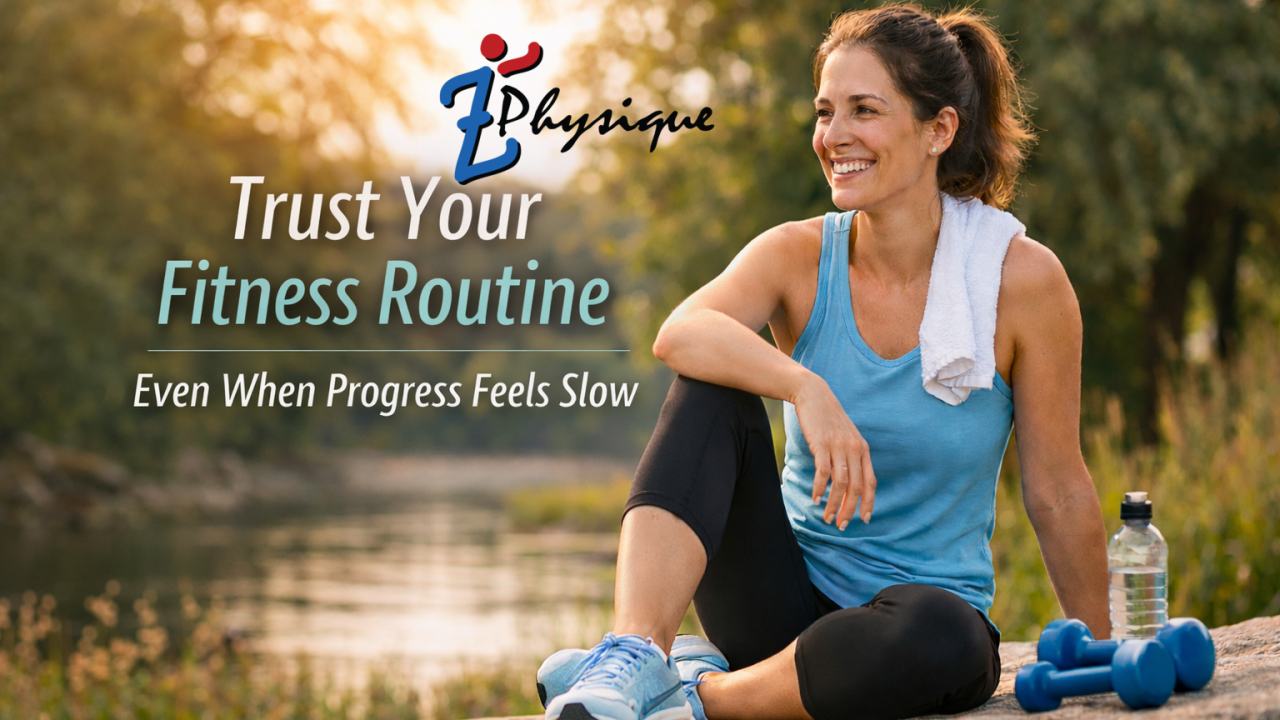
Progress doesn’t always look dramatic. Sometimes, it looks quiet, steady, and easy to overlook. Learning to trust your fitness routine, especially when progress feels slow, is one of the most important skills for long-term success.
Many people don’t struggle because their plan isn’t working. They struggle because they stop trusting it too soon.
When progress feels subtle, doubt often creeps in. That doubt leads to changes, restarts, or giving up entirely. However, sustainable fitness requires patience, consistency, and confidence in the process — not constant adjustment.
Why Slow Progress Can Feel Discouraging
In today’s fitness culture, progress is often portrayed as fast and obvious. When real life doesn’t match that expectation, frustration follows.
Common reasons slow progress feels uncomfortable include:
- Expecting visible results too quickly
- Comparing your timeline to others
- Focusing only on outcomes instead of behaviors
- Assuming slow progress means something isn’t working
In reality, slow progress is often a sign that your routine is sustainable. It means your body is adapting in a way that supports long-term results instead of short-term spikes.
Why Trusting Your Fitness Routine Matters
Trust creates consistency. Consistency creates results.
When you trust your fitness routine:
- You stop jumping between plans
- You allow your body time to adapt
- You reduce mental stress around “doing enough”
- You stay connected during imperfect weeks
Without trust, even a well-designed routine can’t do its job. Progress requires repetition, and repetition requires belief in what you’re doing.
This is why learning to trust your fitness routine matters as much as choosing the routine itself.
How Consistency Builds Results You Can’t See Right Away
Not all progress is visible immediately.
Behind the scenes, consistency improves:
- Strength and endurance
- Joint stability and mobility
- Energy regulation
- Confidence and self-trust
These changes happen gradually. They often appear before aesthetic or scale-based results show up. When you continue showing up during this phase, you allow those adaptations to compound.
This is where many people quit — right before results begin to surface.
Why Early Progress Often Feels Invisible
One of the hardest parts of trusting your fitness routine is accepting that early progress often happens beneath the surface.
Before visible changes appear, your body is:
- Improving movement efficiency
- Strengthening connective tissue
- Adapting neurologically to new patterns
- Building tolerance to training stress
These adaptations matter. They form the foundation for future strength, endurance, and resilience. However, because they aren’t always visible, it’s easy to assume nothing is happening.
This is where many people abandon routines that are actually working. Learning to trust your fitness routine means understanding that progress isn’t always immediate — but it is cumulative. Staying consistent through this phase allows those early adaptations to turn into noticeable results over time.
Why Changing Plans Too Often Breaks Momentum
Switching routines frequently feels productive, but it often slows progress.
When plans change too often:
- Your body doesn’t fully adapt
- Confidence resets repeatedly
- Progress becomes harder to track
- Motivation becomes tied to novelty
Trusting your fitness routine means staying with it long enough to see how it works. Adjustments can happen, but they should support consistency — not replace it.
Structured programs are designed with this in mind. They provide enough repetition to drive progress while still offering variety to stay engaged.
👉 You can explore structured, follow-along video workout programs designed for consistency on the Z Physique website through the Workout Programs Dashboard.
How Support Helps You Trust the Process
Trust is easier to maintain when you’re not doing it alone.
Supportive environments help by:
- Normalizing slower progress
- Reinforcing effort instead of outcomes
- Encouraging continuation instead of restarting
This is why community plays such a powerful role in long-term success. When others remind you that progress doesn’t need to be fast to be real, trust grows naturally.
Inside the Z Physique private community, members focus on consistency, reflection, and support — not pressure or extremes.
Why Reflection Reinforces Trust in Your Fitness Routine
Trust doesn’t grow only through action — it also grows through reflection.
Taking time to notice what is improving helps reinforce belief in your routine, especially during slower phases. Reflection shifts focus away from impatience and toward evidence of progress.
Helpful reflection questions include:
- Do workouts feel more manageable than they did a few weeks ago?
- Am I recovering faster or feeling less sore?
- Has my confidence or consistency improved?
- Do I feel more capable navigating busy weeks?
These signals confirm that your routine is doing its job. Reflection turns experience into reassurance and helps you trust your fitness routine even when visible changes lag behind effort.
Over time, reflection builds patience — and patience strengthens consistency.
What Research Says About Consistency and Progress
The Cleveland Clinic emphasizes that regular physical activity supports physical health, mental well-being, and long-term adherence. Their guidance highlights that consistency — not intensity — is what creates sustainable benefits over time.
This reinforces an important idea: trusting the process allows your body and mind the time they need to respond positively.
How Nutrition Habits Reinforce Trust in Your Routine
Nutrition plays a key role in whether progress feels manageable or frustrating.
When nutrition supports your routine:
- Energy becomes more stable
- Recovery improves
- Workouts feel more productive
- Confidence increases
The Mayo Clinic explains that balanced meals including protein, fiber-rich carbohydrates, and healthy fats support steady energy and overall wellness. Their nutrition guidance reinforces the value of consistency rather than extremes.
In addition, the Mayo Clinic notes that regular exercise plays an important role in stress management and emotional resilience. Their guidance on exercise and stress management explains how consistent movement helps regulate stress hormones, improve mood, and support mental clarity — all of which make it easier to stay committed to a routine over time.
Inside the Z FIT Studio app, nutrition guidance focuses on realistic habits and registered dietitian–created meal plans that support everyday life. When nutrition aligns with your routine, trusting the process becomes easier.
How to Stay Patient Without Losing Momentum
Patience doesn’t mean doing nothing. It means continuing with intention.
To stay patient while trusting your fitness routine:
- Track behaviors, not just outcomes
- Notice energy, strength, and confidence changes
- Reflect weekly instead of daily
- Focus on continuation, not acceleration
These practices help you stay connected even when progress feels subtle.
Trust Builds Confidence Over Time
Every week you continue strengthens trust in yourself.
When you stay consistent:
- Confidence grows
- Self-doubt fades
- Fitness feels more stable
- Progress becomes more predictable
Learning to trust your fitness routine is often the turning point between repeated restarts and lasting success.
💙 Take the Next Step
If progress feels slow, don’t assume something is wrong.
Instead:
- Stay consistent
- Lean into support
- Trust the structure you’re following
Results don’t require rushing. They require repetition.
And you don’t have to navigate that alone.
