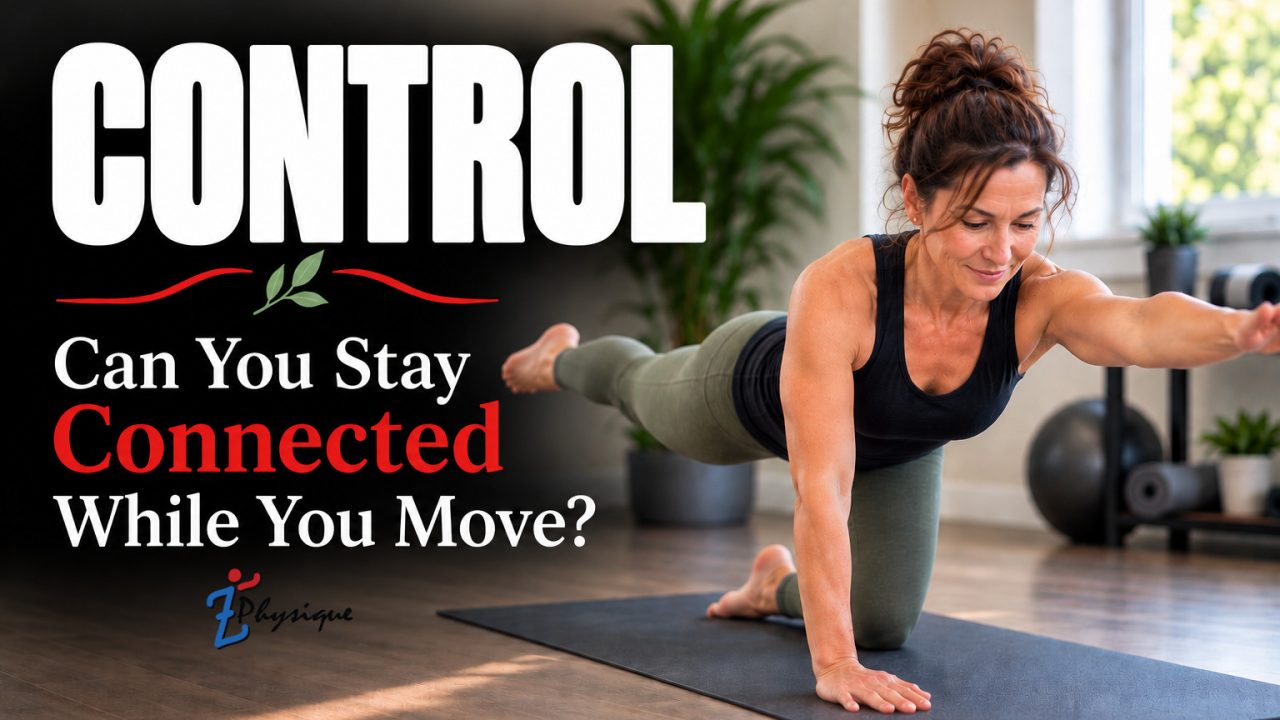
This week’s CONTROL workout begins with something that sounds simple: finding a strong position and staying connected as the movement changes.
It’s one thing to find that position when everything is still. Then an arm reaches, a leg extends, or your balance changes. Suddenly, the position that felt fairly comfortable a moment ago asks something different from you.
Last week’s POWERHOUSE preview introduced the idea of connecting through the center before adding movement. CONTROL takes that connection and asks a different question: Can you maintain it while the rest of your body moves?
It’s a simple idea, but it’s one we encounter far beyond a workout.
Control Doesn’t Mean Staying Still
We sometimes think of control as keeping everything perfectly in place. But our bodies aren’t designed to spend everyday life frozen in one position.
We reach, step, bend, turn, and shift our weight from one side to the other.
The challenge isn’t preventing movement. It’s creating enough stability that movement can happen without everything else having to follow along.
You can experience that in something as simple as balance and coordination while standing on one leg. The moment the other leg moves, your body has to make adjustments. Your foot responds to the floor while your hips help manage your position. At the same time, your core contributes support as the rest of your body works to stay balanced.
It’s what helps you manage it.
What to Expect in This CONTROL Workout Preview
This week’s CONTROL workout preview comes from PILATES, Coach Ro’s four-week Pilates-inspired program.
CONTROL builds from the connection introduced in POWERHOUSE and adds movement around it. The complete workout incorporates standing balance, controlled leg work, Side Kick variations, and Bird Dog progressions to challenge stability through the hips, legs, and core.
In this preview, pay attention to more than the moving arm or leg. Notice what’s happening everywhere else.
Does your weight shift? Do your hips want to rotate? Does one side feel steadier than the other? Can you reduce your range when needed and find a position that gives you more control?
You don’t have to make your movement look exactly like Ro’s. Find the version that allows you to stay connected while still giving yourself something to work on.
Equipment: Exercise mat and enough room to move comfortably
Style: Stability, balance, hips and legs, core connection, and controlled Pilates-inspired movement
The Moving Part Isn’t the Whole Exercise
When we’re following a workout, our attention naturally goes toward whatever is moving.
If Ro asks us to extend a leg, we watch the leg. If an arm reaches, that’s where our attention goes. We tend to think of completing that movement as completing the exercise.
But there’s more happening.
While the leg moves, what happens through your pelvis? While you’re balancing, where does your weight go? As an arm reaches away from your body, can you maintain the connection you established before the movement began?
The moving part may be the easiest thing to see.
Sometimes the real work is happening everywhere else.
Your Range Belongs to You
There’s another temptation when we’re following someone on a screen: matching them.
If Ro lifts her leg to a certain height, we may assume that’s where ours should go too. If she reaches farther, we may decide farther must be better.
It doesn’t have to work that way.
Your useful range is the one where you can maintain the purpose of the exercise. Maybe your leg doesn’t lift as high. Perhaps your knee stays slightly bent. You may need a hand for support during a standing balance exercise.
Those aren’t lesser versions of the movement.
They’re choices that allow you to stay in charge of it.
As your strength, familiarity, balance, or mobility changes, your range may change too. But you don’t have to force the destination before your body is ready for the trip.
A Wobble Gives You Information
Balance work has a way of making our imperfections difficult to hide.
One side may feel surprisingly steady while the other has you reaching for support. A movement that looked straightforward when Ro demonstrated it may suddenly require much more concentration when you try it yourself.
A wobble isn’t necessarily evidence that you’re doing something wrong.
It can simply tell you where today’s challenge is.
Instead of immediately judging it, notice what happens. Can you slow down? Adjust your stance? Reduce the range? Find your center again and continue?
That’s still control.
In fact, learning how to respond when you lose a little control may be just as useful as maintaining it perfectly in the first place.
This Week’s Challenge
As you move through CONTROL, choose one exercise and pay attention to the part of your body that isn’t moving.
If a leg reaches, notice your hips. If you’re working from Bird Dog, notice what happens through your trunk as an arm or leg leaves the floor. During standing balance, pay attention to how your grounded foot and supporting leg respond.
You don’t need to correct everything you notice.
Start by becoming aware of it.
Then experiment with a smaller range, a slower movement, or a little additional support and see whether the exercise feels different.
Control doesn’t mean forcing your body to stay perfectly still.
It means staying connected enough to respond.
Continue With PILATES
CONTROL is the second of five workouts inside PILATES, Coach Ro’s four-week Pilates-inspired program.
POWERHOUSE began by establishing connection through the center. CONTROL asks you to maintain that connection as the body moves. Next, PRECISION will bring even more attention to placement, alignment, and the pathway of each movement before we eventually bring those pieces together through FLOW and finish the week with LENGTHEN.
The same five workouts repeat throughout the four weeks, giving you time to become familiar with the movements and notice changes that aren’t always measured in repetitions or intensity. You may find your balance sooner, control a movement that once felt wobbly, or recognize your position without having to think quite as hard about it.
Those changes count.
Start Building Healthier Habits
Paying attention, making adjustments, and finding what works for you aren’t limited to exercise. They’re part of building sustainable habits too.
Our Healthy Lifestyle Starter Guide offers practical ways to approach movement, nutrition, hydration, sleep, and everyday wellness without expecting yourself to change everything at once.
