Many people believe improving their health requires dramatic lifestyle changes. However, fitness habit stacking offers a much simpler approach.
Instead of trying to completely rebuild your schedule, fitness habit stacking connects new healthy actions to habits you already perform daily.
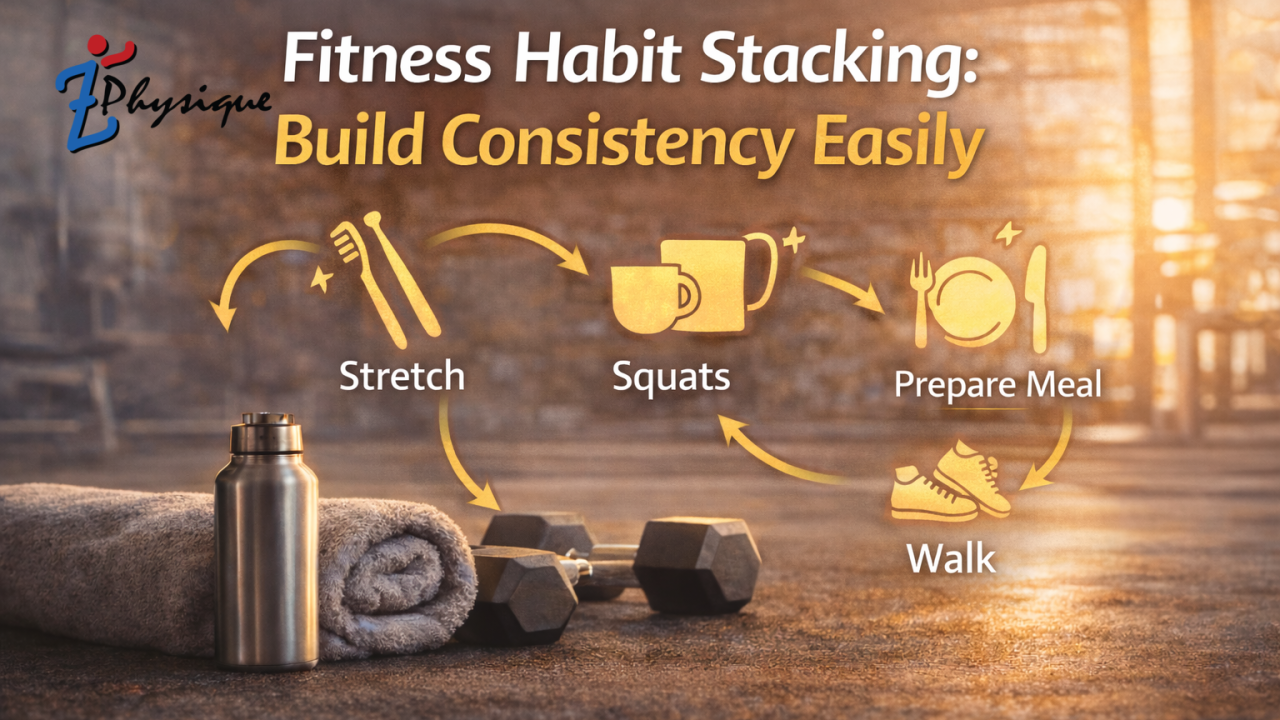
For example, you might stretch after brushing your teeth, take a short walk after lunch, or complete a short strength workout before your evening routine.
These small connections make it easier to build momentum because the behavior becomes part of an existing routine.
Over time, these simple actions compound into a consistent and sustainable fitness lifestyle.
What Is Fitness Habit Stacking?
Fitness habit stacking comes from behavioral psychology. The idea is straightforward: attach a new behavior to an existing habit.
Rather than relying on motivation alone, the existing routine acts as a trigger for the new action.
Examples of fitness habit stacking include:
☕ Doing five squats while waiting for your coffee
🚶 Walking for ten minutes after dinner
🧘 Stretching before your morning shower
🏋️ Completing a short workout before starting work
These simple connections reduce decision fatigue and make healthy behaviors easier to repeat.
Because the routine already exists, the new habit feels more natural.
Why Habit Stacking Works for Busy Adults
Busy adults often struggle with fitness because their schedules are unpredictable. Long workouts and complicated routines rarely fit into everyday life.
However, fitness habit stacking works because it focuses on small, repeatable actions rather than major lifestyle changes.
Instead of searching for an hour of free time, you build movement into moments that already exist.
As a result, consistency improves without creating additional stress.
Over time, these small habits accumulate into meaningful progress.
Habit Stacking Makes Workouts Easier to Start
One of the biggest barriers to exercise isn’t the workout itself — it’s getting started.
When workouts feel like a major event that requires preparation, motivation, and time, they often get pushed aside during busy days. Fitness habit stacking solves this problem by reducing the friction involved in beginning.
For example, instead of scheduling a separate workout session later in the day, you attach the activity to an existing routine.
Common examples include:
☀️ Stretching immediately after waking up
☕ Performing a short mobility routine while coffee brews
🚶 Taking a ten-minute walk after lunch
🏋️ Completing a quick strength circuit before dinner
Because the trigger habit already exists, starting the workout becomes easier.
Over time, the brain begins to associate the two activities together. As a result, the fitness habit begins to feel automatic rather than forced.
This is why fitness habit stacking often produces better long-term adherence than relying on motivation alone.
Small Fitness Habits Build Long-Term Momentum
Many people underestimate the impact of small daily actions. However, long-term fitness success rarely comes from extreme workouts.
Instead, progress usually develops through small improvements repeated consistently.
For example:
➕ Add a short mobility routine in the morning
🏋️ Perform one strength workout three times per week
🚶 Walk for ten minutes after meals
🧘 Stretch while watching television
Although these habits seem minor individually, they produce meaningful results when practiced regularly.
Fitness habit stacking simply makes those habits easier to repeat.
Reduce Decision Fatigue With Simple Routines
One major barrier to consistency is decision fatigue.
If you constantly ask yourself when, where, and how you should exercise, motivation begins to decline.
However, fitness habit stacking eliminates many of those decisions.
For example:
Morning coffee → five minutes of mobility
Lunch break → ten-minute walk
After work → short strength workout
Because the trigger already exists, the habit becomes automatic.
Over time, this structure helps reinforce a consistent workout routine.
Structured Workouts Support Habit Stacking
While small habits are powerful, structured programs can accelerate progress.
Short, guided workouts fit perfectly into a habit-stacking approach.
Many members find success by pairing small daily habits with structured programs like the follow-along training sessions available inside the Z Physique workout program library.
These structured video workouts inside the Z Physique program library
provide clear progression and remove guesswork.
When workouts are planned ahead of time, habit stacking becomes even easier to maintain.
Community Support Reinforces Healthy Habits
Building new habits can feel challenging at first. However, support and accountability can make a huge difference.
Encouragement from others helps reinforce consistency, especially during busy weeks.
Inside the Z Physique private community, members regularly share progress, ask questions, and celebrate small wins together.
Community encouragement often turns short-term motivation into long-term lifestyle change.
Nutrition Habits That Stack Naturally With Fitness
Fitness habit stacking also works well with nutrition habits.
Rather than following strict diets, focus on connecting nutrition behaviors to existing routines.
For example:
🥗 Add vegetables to lunch each day
💧 Drink water after every workout
🍎 Eat fruit as an afternoon snack
🍽 Prepare tomorrow’s lunch after dinner
According to the Mayo Clinic’s guidance on nutrition basics for healthy eating, balanced meals that include protein, fiber-rich carbohydrates, and healthy fats help support steady energy throughout the day.
These types of simple habits complement fitness routines and support long-term consistency.
How Habit Stacking Strengthens Long-Term Behavior Change
Behavior change rarely happens all at once. Instead, it develops through repeated patterns that gradually reshape daily routines.
Fitness habit stacking works because it strengthens those patterns over time.
When small healthy actions are repeated daily, the brain begins to treat them as part of the normal routine. Eventually, these actions require less conscious effort.
Instead of relying on willpower, habits become automatic.
For example:
🧘 A short morning stretch becomes part of waking up
💧 Drinking water becomes part of finishing a workout
🥗 Preparing balanced meals becomes part of evening routines
🚶 Walking becomes part of winding down after dinner
As these behaviors repeat, they reinforce each other.
The result is a lifestyle where movement, nutrition, and recovery naturally support each other without feeling overwhelming.
That is the true goal of fitness habit stacking — not temporary motivation, but long-term behavior change.
Habit Stacking Builds Confidence Over Time
One of the most powerful benefits of fitness habit stacking is the confidence it builds.
When you repeat small healthy actions daily, progress becomes visible.
Over time you begin to notice:
⚡ Increased energy
💪 Improved strength
🧠 Better mental clarity
🏃 Greater physical capability
Confidence grows not from extreme workouts, but from consistent habits.
That’s why habit stacking works so well for sustainable fitness.
Take the Next Step
Building healthy habits does not require dramatic lifestyle changes.
Instead, start small and focus on consistency.
You can begin by:
🏋️ Following structured workouts on the Z Physique website
🥗 Supporting your progress with RD-created meal plans in the Z FIT Studio app
🤝 Connecting with others inside the supportive Z Physique community
When small habits stack together, they create powerful momentum.
And momentum is what turns short-term motivation into long-term health.
