Most of us think about an exercise by focusing on the obvious part.
With a lunge, we think about stepping back, bending the knees, lowering the body, and standing back up. We pay attention to how deep we go, whether our legs are working, and maybe how many repetitions we can complete.
But there’s another part of movement that’s easy to overlook: what happens between those positions.
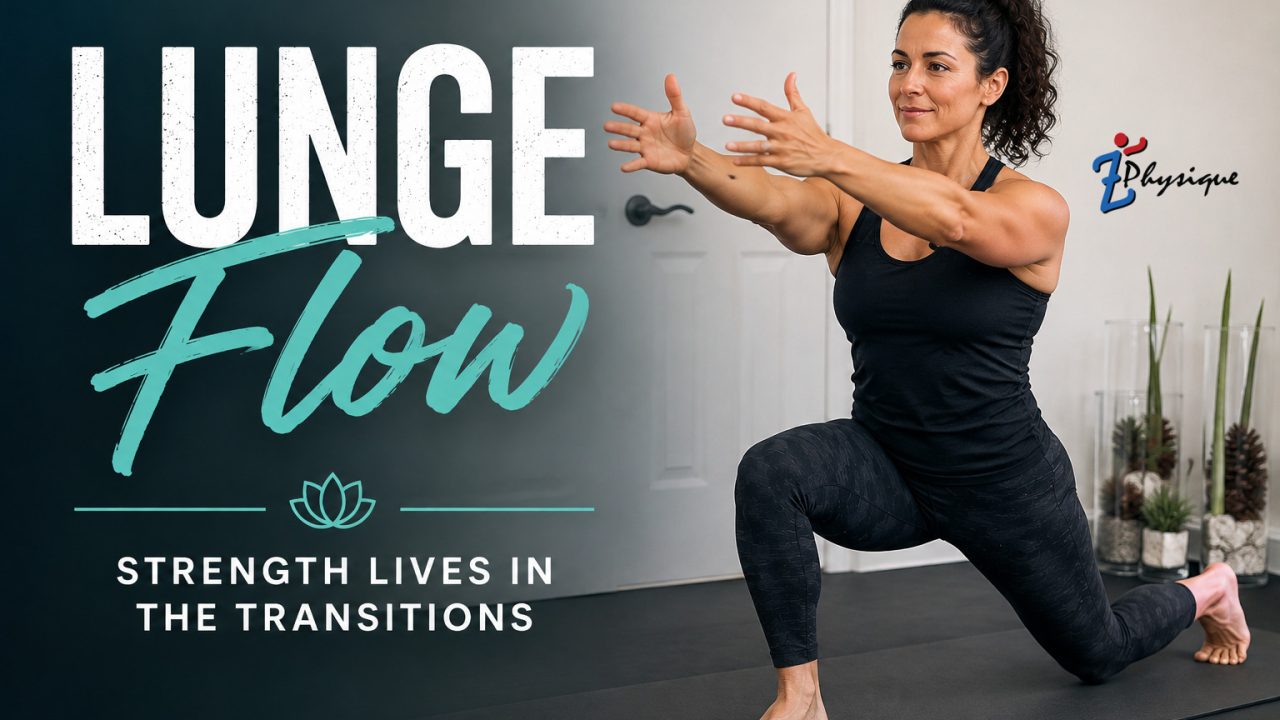
This week’s Workout of the Week is Lunge Flow, a short preview from our Fluid Motion program that explores exactly that. Instead of treating the lunge as a movement you simply complete and reset, Coach Ro connects a series of lunge variations into one continuous flow.
And that’s where something interesting happens.
The transition becomes part of the exercise.
There’s Strength Between the Repetitions
When movements are separated into individual repetitions, it’s easy to think of the beginning and end as the important parts.
But everyday movement rarely works that way.
We step off a curb and change direction. We lower ourselves toward the floor and shift our weight to stand again. We reach for something while one leg is carrying more of our weight than the other. Our bodies are constantly moving through positions rather than simply arriving at them.
That’s one reason flowing movement can feel so different from traditional repetitions.
As you move from one lunge position into another, your legs are still working, but so are your balance, coordination, mobility, and body awareness. You have to control where your weight is going instead of simply rushing toward the next position.
Suddenly, the space between exercises isn’t empty anymore.
It’s part of the work.
What to Expect in Lunge Flow
This week’s Lunge Flow workout is approximately four minutes long and requires no equipment beyond a comfortable place to move.
Coach Ro guides you through a sequence of lunge-based movements and transitions that challenge the lower body while encouraging you to stay connected to the movement from beginning to end. You’ll shift your weight, change positions, reach, rise, and move through different lunge patterns rather than simply repeating the same exercise over and over.
The goal isn’t to move quickly.
It’s to move intentionally.
Pay attention to how your foot meets the floor. Notice what happens when your weight begins to shift. Feel how your core helps stabilize you as your arms and legs move. Give yourself enough time to arrive in one position before moving smoothly toward the next.
Workout Length: Approximately 4 minutes
Equipment: Yoga mat or comfortable floor space
Style: Lower-body strength, balance, mobility, and flowing movement
Control Changes the Exercise
There’s a temptation with familiar movements to go on autopilot.
You’ve probably done a lunge before. Your body knows roughly where it’s supposed to go, so it’s easy to step back, lower down, come up, and move on.
Lunge Flow asks you to pay attention again.
When you slow down enough to notice the transition, familiar movements begin to feel different. You may notice one side feels steadier than the other. You might discover that your balance changes depending on where your arms are positioned. You may realize that controlling the return from a lunge requires just as much concentration as lowering into it.
None of those observations mean you’re doing something wrong.
They’re information.
And learning to notice that information is one of the ways we become better movers.
Movement Doesn’t Have to Be Perfect to Be Valuable
Flowing movements can sometimes look effortless when we watch someone else perform them.
They don’t always feel effortless when we’re the ones doing them.
Your balance may wobble. A transition might feel awkward. You may need to shorten your range of motion, slow down, or reset your feet before continuing.
That’s okay.
The objective isn’t to reproduce Coach Ro’s movement perfectly. It’s to find the version of the movement that allows you to stay controlled and connected.
Over time, something that initially requires a lot of thought can begin to feel more natural. Your balance improves. Your transitions become smoother. You stop thinking quite so much about where your feet need to go.
That’s progress too.
This Week’s Challenge
As you move through Lunge Flow, pay attention to the moments you might normally rush past.
Notice the shift of your weight before you step. Feel your foot connect with the floor. Give yourself time to stabilize before changing direction. Instead of judging a wobble or awkward transition, simply notice it and see what happens on the next repetition.
You don’t need to make the movement bigger or faster to make the workout more effective.
Sometimes the challenge is simply staying present long enough to feel what’s happening.
Because strength isn’t only found in the positions we can hold.
Sometimes it’s found in how confidently we move from one to the next.
Continue Building Your Flow
Lunge Flow is a short preview from Fluid Motion, our six-week yoga-inspired strength program designed to bring strength, balance, mobility, flexibility, and flowing movement together.
Throughout the program, Coach Ro guides you through purposeful sessions that give you opportunities to practice movements, become more comfortable with them, and notice how your body changes as you continue showing up.
If you enjoyed the way this workout combines strength with movement, Fluid Motion takes that idea much further.
Start Building Healthier Habits
You don’t need to overhaul your life to begin moving in a healthier direction. Small choices—taking a walk, completing a short workout, preparing a nourishing meal, or simply paying more attention to how your body feels—can begin creating momentum.
Our Healthy Lifestyle Starter Guide can help you take those first steps with practical strategies for movement, nutrition, sleep, hydration, and sustainable healthy habits.
